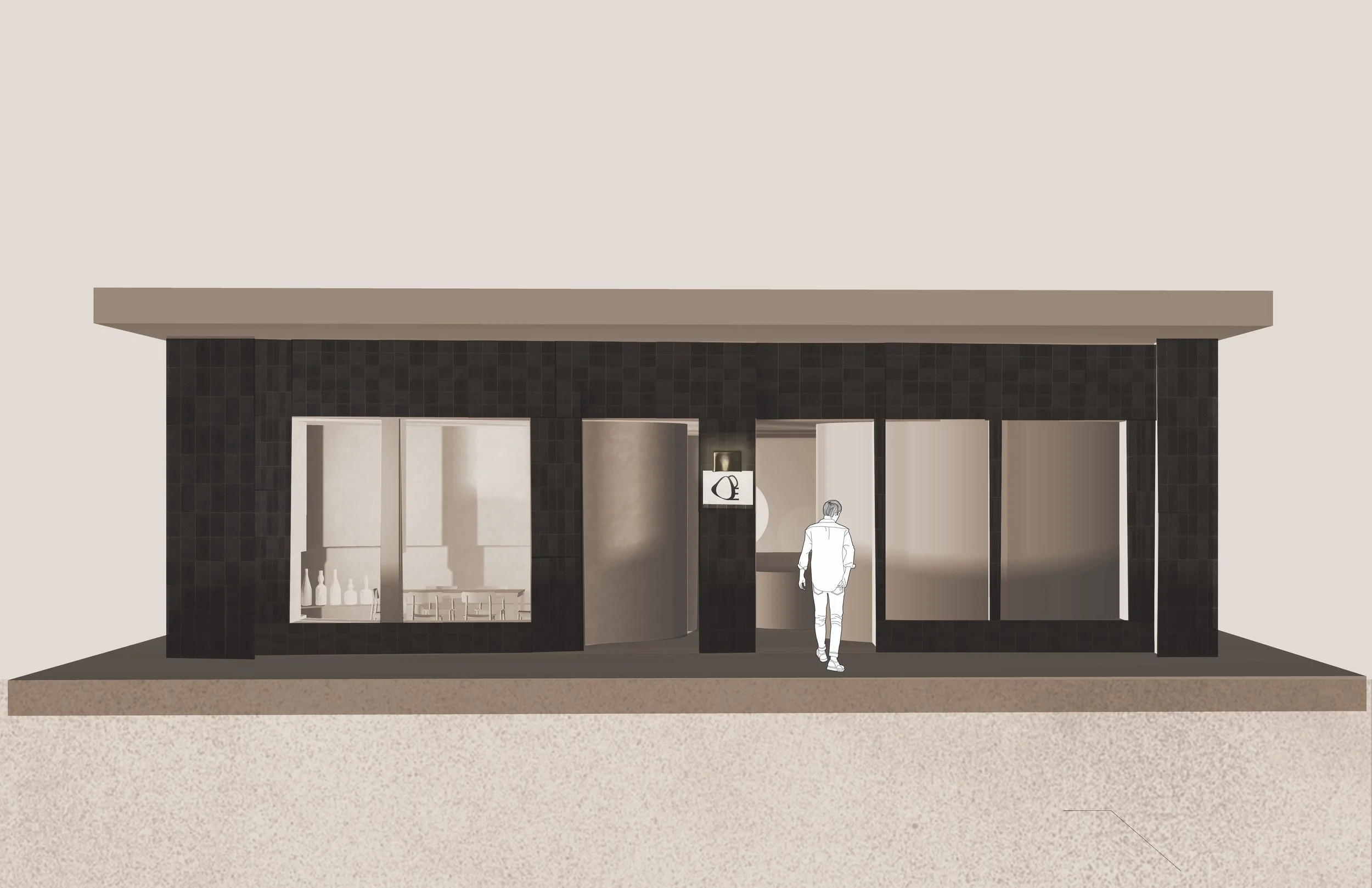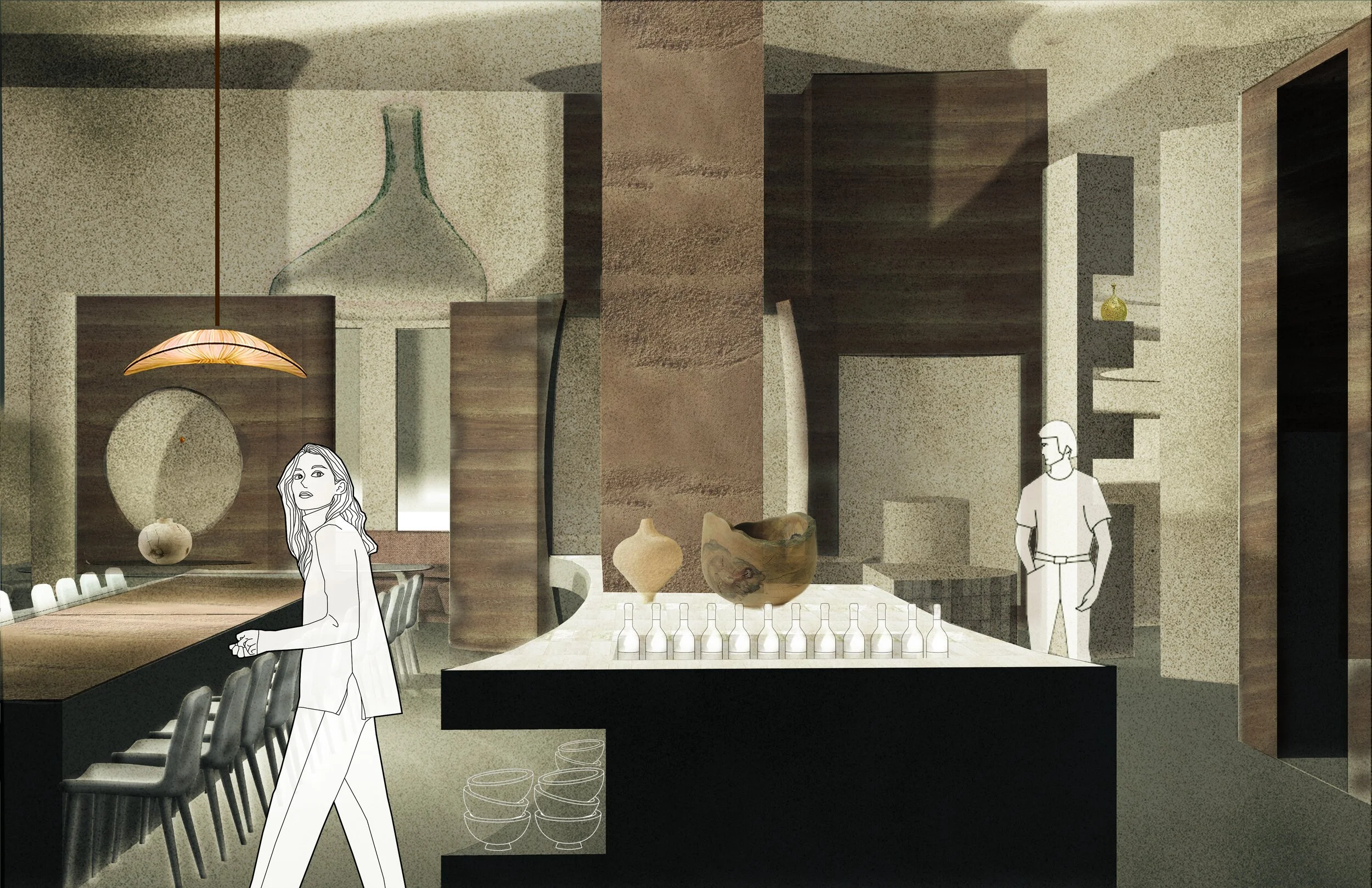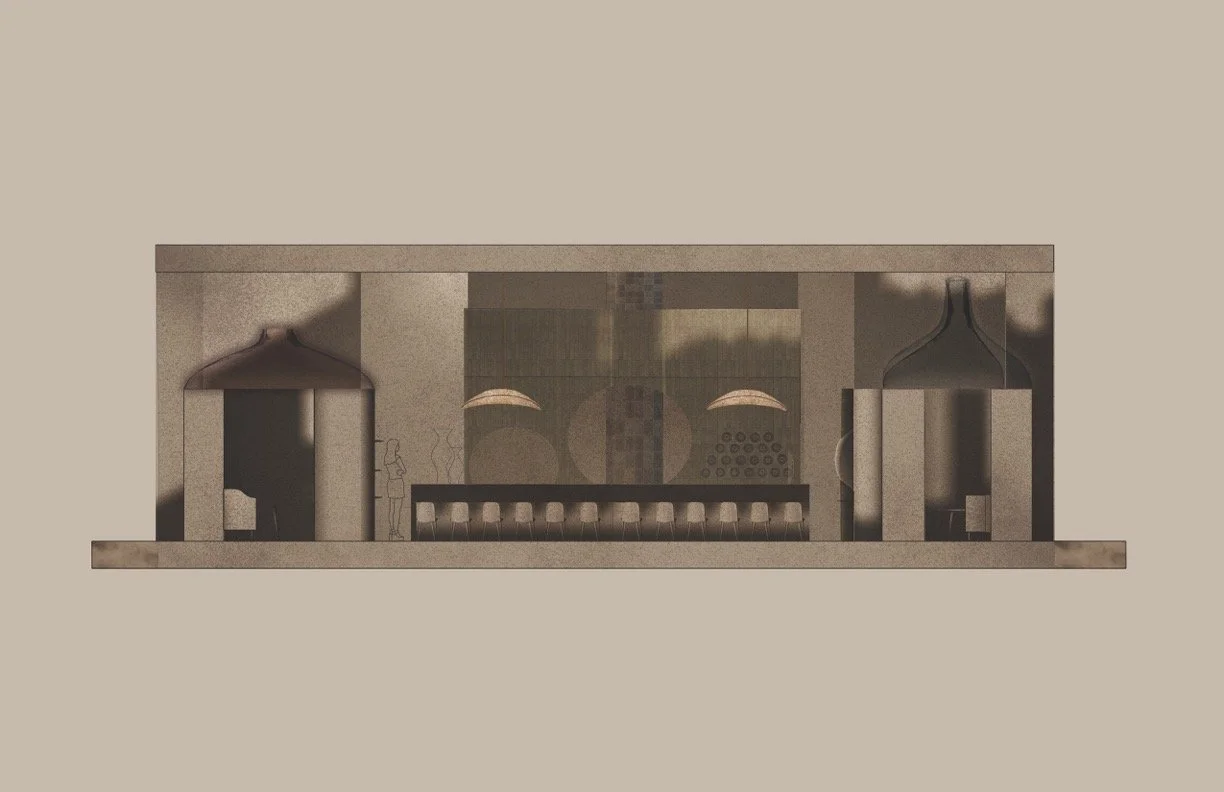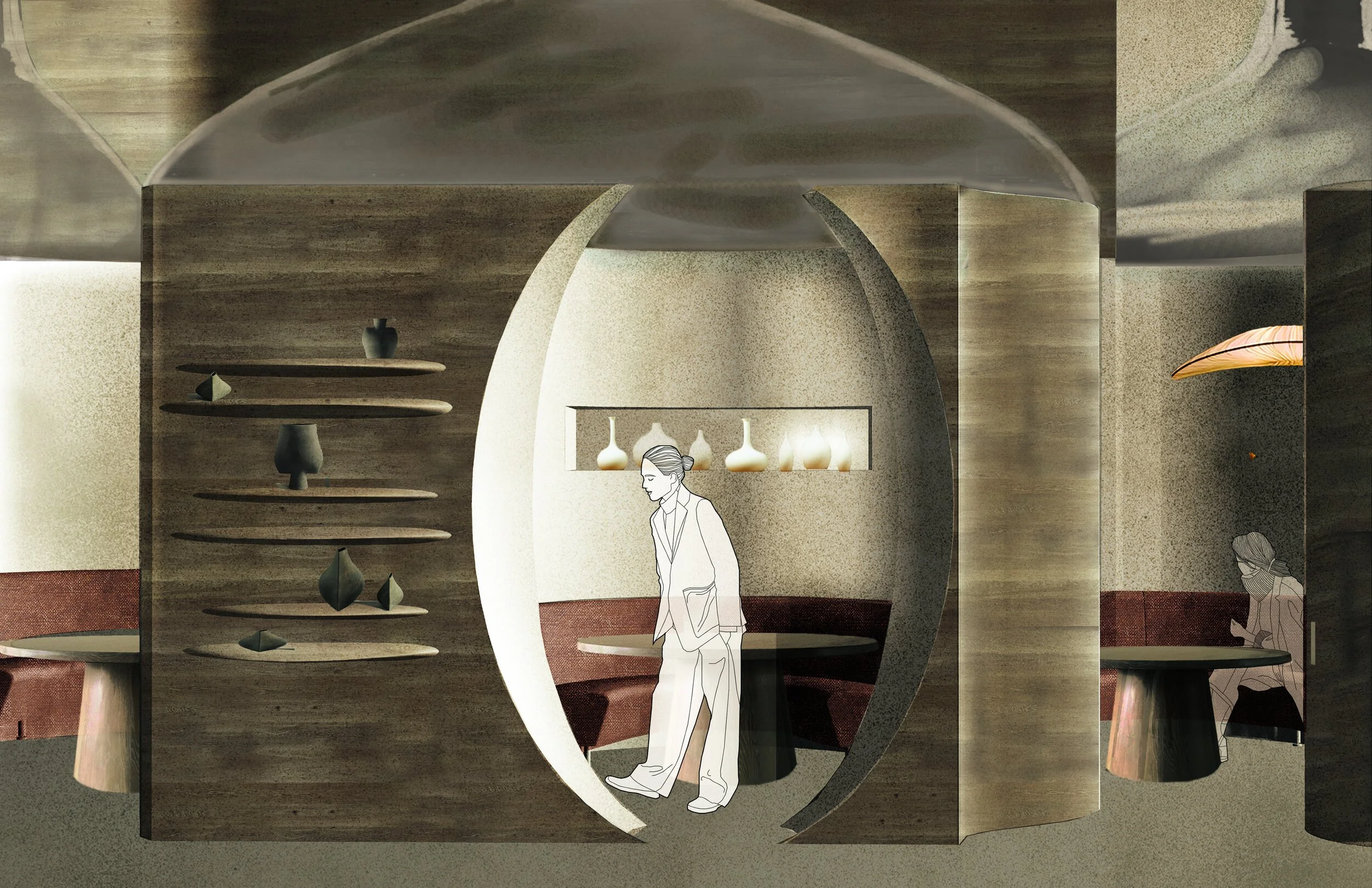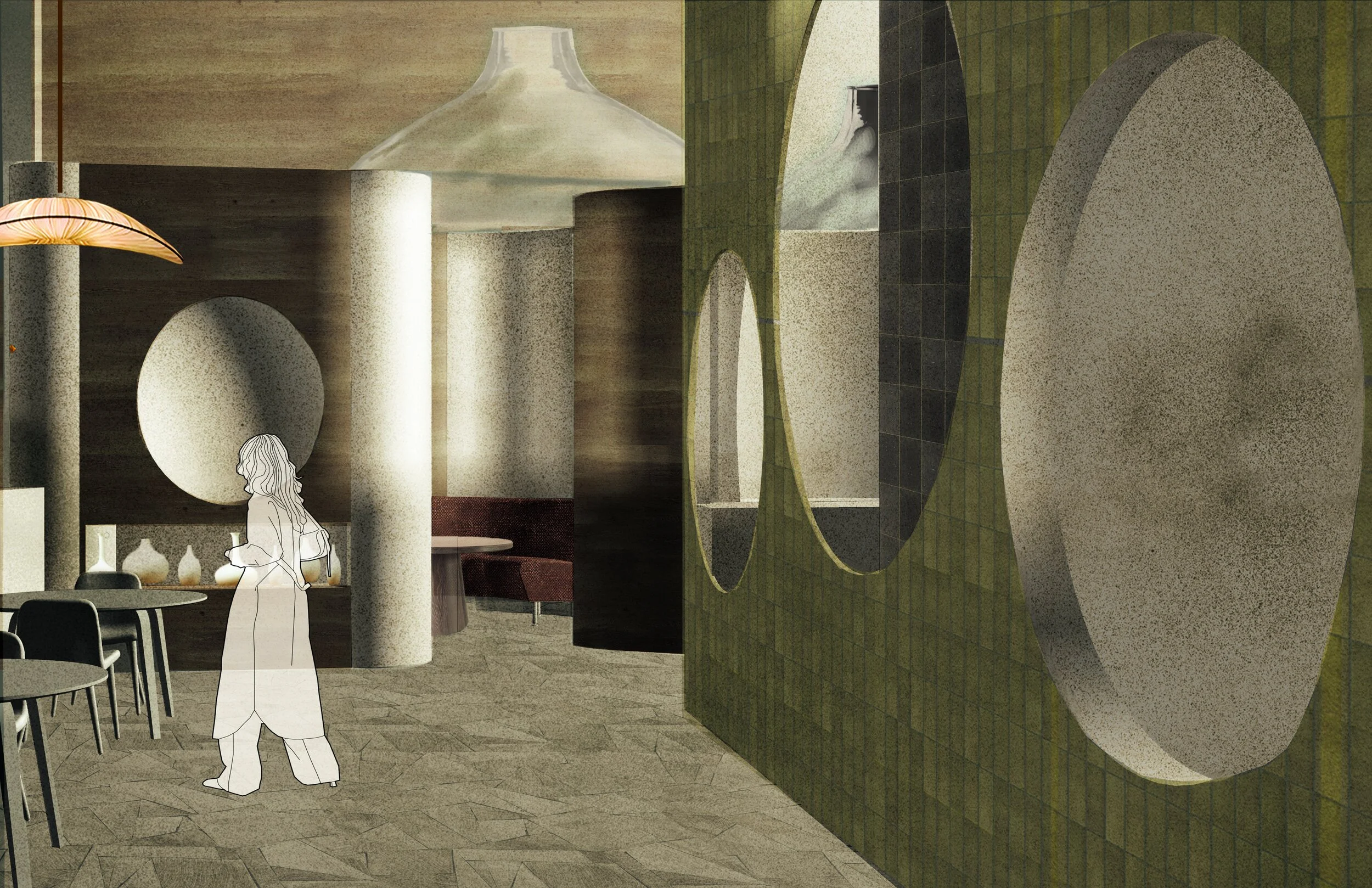
ODE is imagined as a vessel — a space that holds ritual, craft, and connection.
The name stems from three guiding ideas: Offering, where food becomes a soulful act; Dialogue, between maker and diner, tradition and innovation; and Essence, distilling what’s most meaningful.
A rotating kitchen program welcomes chefs from South America to Brooklyn to reinterpret simple wood-fired pizza and vegetable-based dishes, alongside artists and guests from around the world.
Craftsmanship is central: sculptural furniture, ceramics, and objects are embedded into the space, used in the meal, and available to take home — blurring dining, gallery, and retail.
The plan unfolds like a carved vessel, with niches for intimacy and open zones for connection. At the center, long server islands become ceremonial axes for plating, pouring, and display.
Inspired by a vase made by my father, the architecture embraces compression, expansion, and tactility — arches and vaults mark transitions, while layers of plaster, wood, and stone create a space that doesn’t just serve, but holds.